
01
Headroom is a rolled number
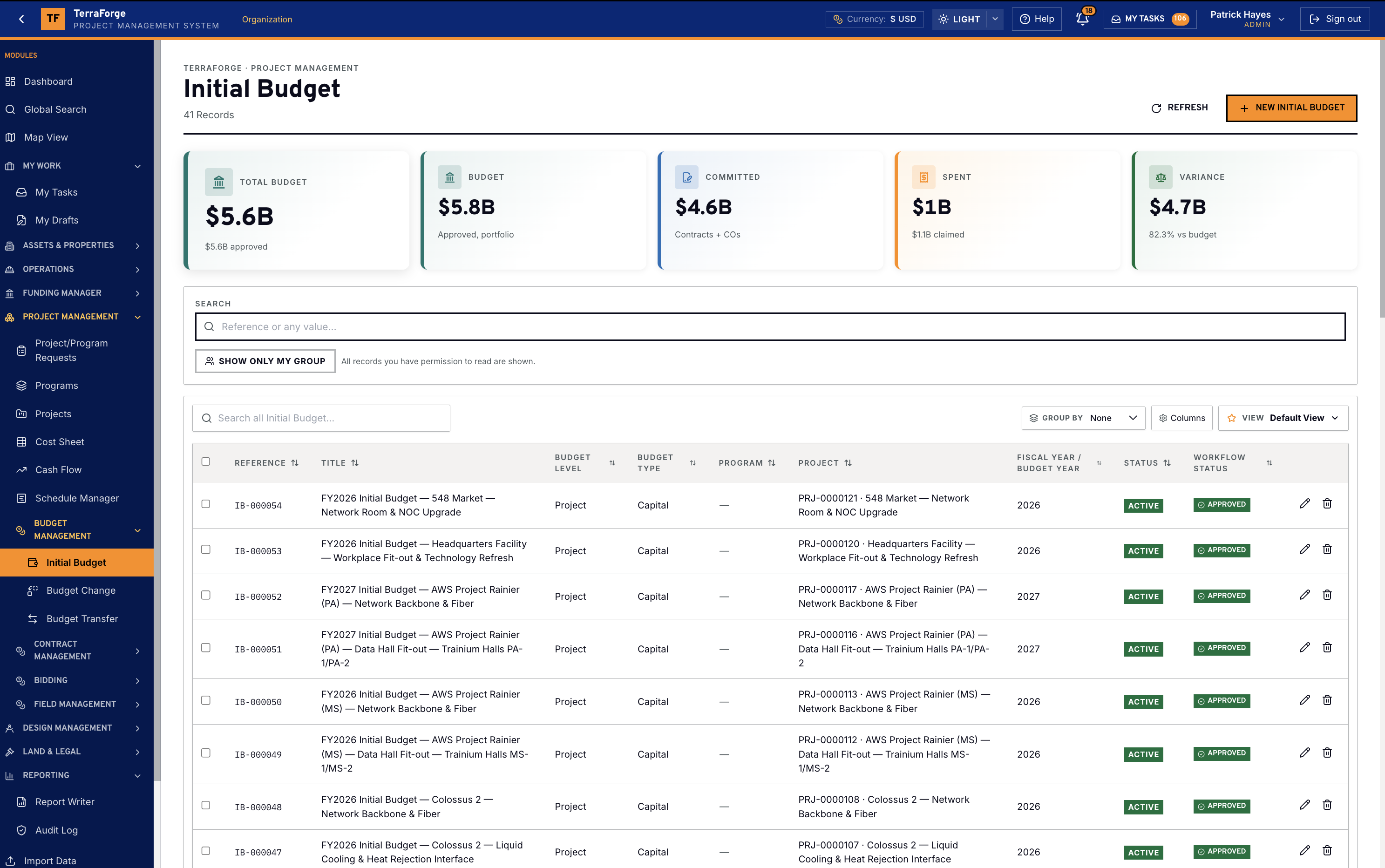
Approved, committed, actual, forecast and remaining stay honest from a rack PDU line to the campus and the wave.
Budget & cost
01
Approved, committed, actual, forecast and remaining stay honest from a rack PDU line to the campus and the wave.
02
Generators, switchgear and liquid cooling are configured in the product. The next code does not wait on a consultancy.
03
Corporate capex, debt, grant, partner equity and operating budget do not collapse into one pot on the way to the programme or the project.
Roll-up and compare
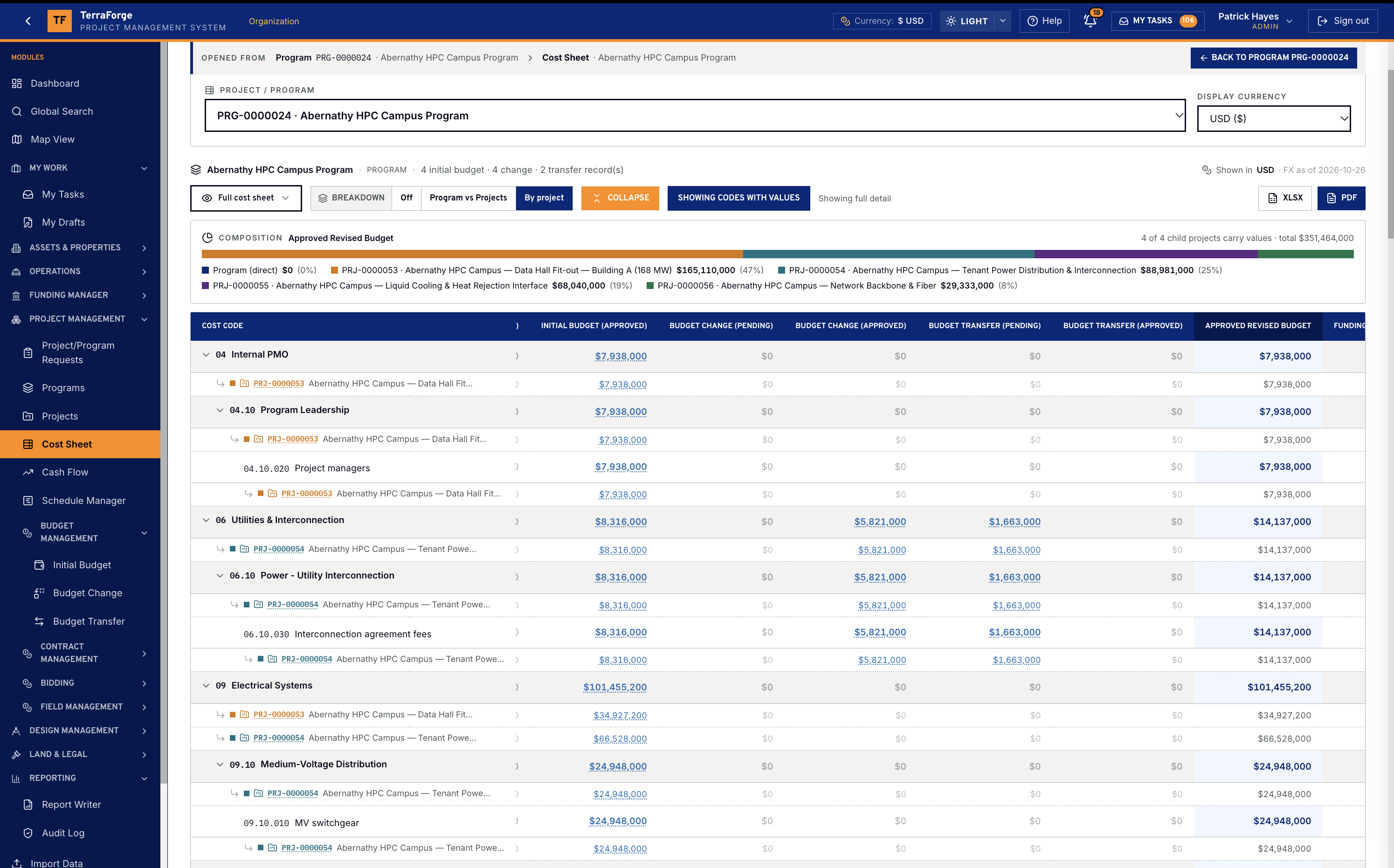
Programme Cost Sheet rolls up from child projects — Initial, Changes, Transfers, Revised. Most legacy PMIS stop at the project sheet. A project sheet is the WBS. The portfolio sheet rolls the programmes. On Abernathy HPC Campus Program the composition bar is the child projects summing into Approved Revised Budget.
Segment by state, campus, programme, project or cost code and compare those slices on the same arithmetic. Hall against hall. Power programme against cooling programme. The comparison is the drill, not an export rebuilt on Friday.
The programme team owns it. Same navigation at portfolio, programme and project. Same My Tasks inbox. App Builder publishes the next step on a Tuesday, without a vendor ticket.
What the hall actually buys
Diesel and gas generators, server racks, rack PDUs, chillers and CRAC, MV switchgear, cooling towers, liquid cooling and heat rejection. Dated FX comes from Company Configuration.
The financial frame on the Operations Wall can present these numbers in a portfolio review. It reads this cost sheet. It does not replace it.
Funding Manager
Funding Manager answers a different question from the cost sheet: where the money comes from. Sources are the pots — corporate capex, debt financing, government grant, partner equity, operating budget, lease or sale-leaseback, vendor financing, customer prepayment. The fund code locks the name, the type and the funding-breakdown group.
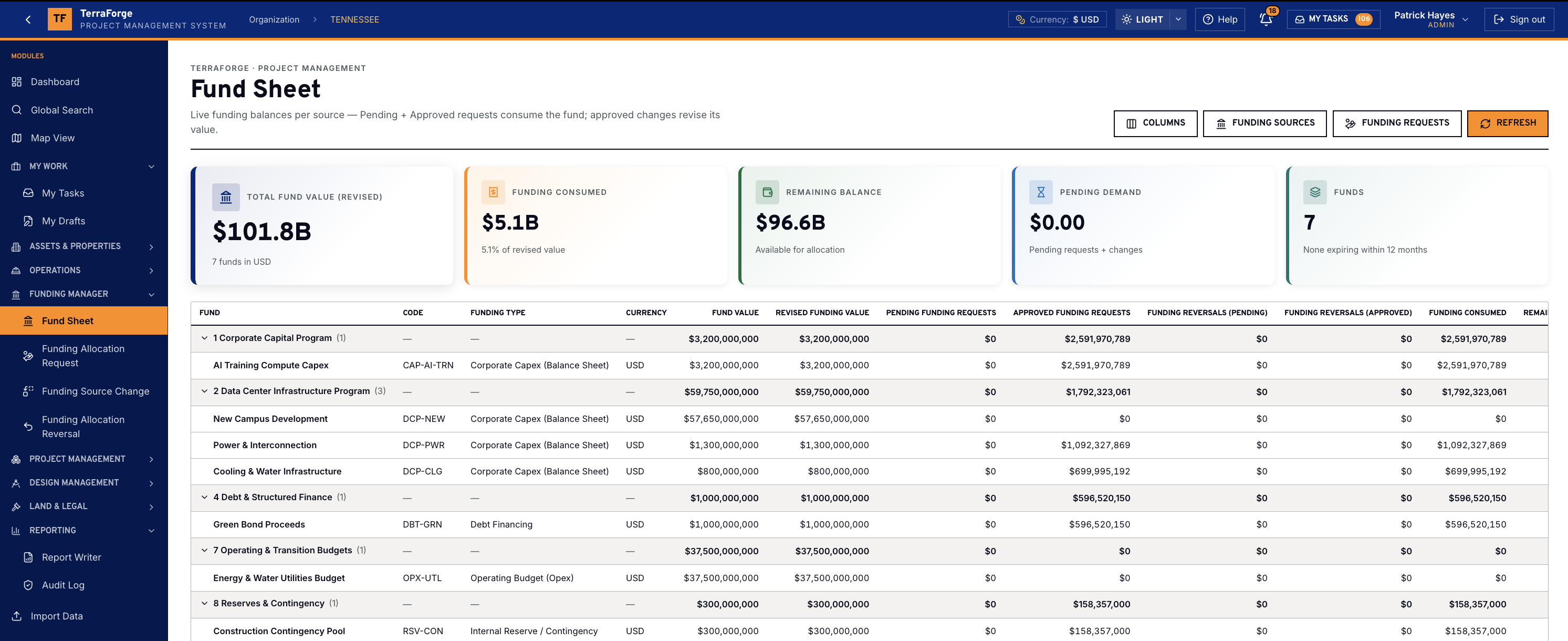
The Fund Sheet is the portfolio view: revised value, consumed, remaining (revised minus consumed minus pending), pending demand, and funds expiring within 12 months. Pending and approved requests consume the fund. An approved change revises its value. On this demonstration sheet seven funds in USD show a revised value of $101.8B, $5.1B consumed, and $96.6B still available. Data center infrastructure is one programme on that sheet, with pots for the campus, for power and interconnection, and for cooling and water. Corporate capex, debt, operating budget and contingency stay in their own groups.
An allocation splits one or more sources — the percentages must total 100%, and priority 1 is consumed first — and targets a programme or a project. The request total is that record’s approved budget position. The nav beside the sheet is the allocation request, the source change, and the reversal. A source change revises a pot’s value and leaves the original amount. A reversal returns an approved allocation in the same proportions. Approved requests are not edited. Those figures land on the cost sheet as Funding Allocations (Approved) and Budget vs Funding Δ, at organisation, programme and project. Pending stays pending until the workflow approves it.
What ships
Your cost codes, your workflow, your campuses. Write sales@terraforge.build.